Cotton Tote Bags Wholesale from India for UK USA Canada UAE Germany Japan Australia

Cotton tote bags look simple, but bulk sourcing can become expensive if fabric, stitching, compliance, packing, and freight are not planned well. For importers, retailers, promotional product companies, event organisers, and private label brands, India remains one of the most practical sourcing hubs for cotton carry bags at scale.
This guide covers Cotton Tote Bags Wholesale from India for UK USA Canada UAE Germany Japan Australia buyers, with a clear look at quality, pricing, shipping, and market-specific requirements.
High frequency keywords to track across your sourcing plan include cotton tote bags wholesale, cotton tote bags from India, custom cotton tote bags, organic cotton tote bags, canvas tote bags wholesale, eco-friendly tote bags, promotional cotton bags, private label tote bags, and Indian cotton bag manufacturer.

Why India is a strong sourcing base for cotton tote bags
India has a long textile manufacturing base, wide cotton availability, and a large network of stitching, dyeing, printing, embroidery, and export packing units. This makes it suitable for both plain bulk bags and customised programmes.
The main sourcing advantages are clear.
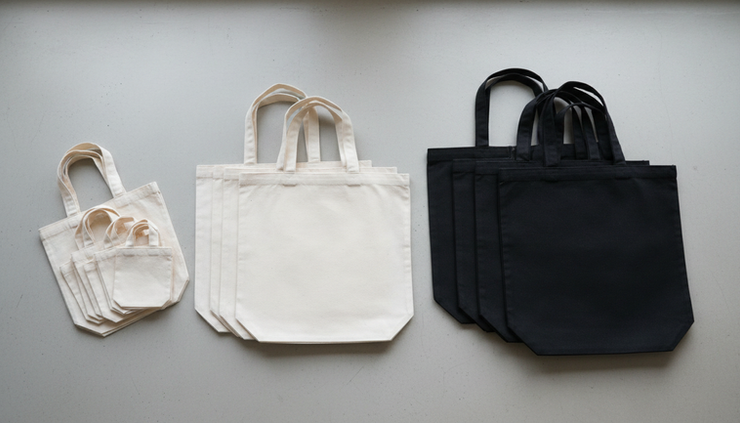
Material variety Buyers can source lightweight cotton, heavier canvas, recycled cotton blends, organic cotton, dyed cotton, and laminated options.
Customisation depth Indian suppliers commonly offer screen printing, digital printing, embroidery, woven labels, hang tags, inner pockets, zippers, gussets, contrast handles, and barcode packing.
Order flexibility Many exporters work with mixed bag sizes, GSM options, and multiple designs in one shipment, subject to minimum order quantities.
Cost competitiveness Labour, textile processing, and finishing costs can be competitive when orders are planned in volume.
Export experience Established suppliers are familiar with international documentation, carton marking, palletisation, and inspection requirements.
For related internal reading, importers often compare custom cotton tote bags, organic cotton bags, and canvas tote bags wholesale before finalising specifications.
Key sourcing factors buyers should compare before placing orders
A good tote bag quote is more than a unit price. The same bag can perform very differently depending on fabric weight, stitching, shrinkage control, handle strength, printing method, and packing quality.
Fabric quality and GSM matter
GSM means grams per square metre. It is one of the first technical details to confirm.
Common options include:
Bag type | Common use | What to check |
Lightweight cotton | Giveaways, events, mailer inserts | Fabric transparency, handle strength, print clarity |
Medium cotton | Retail bags, grocery use, promotional campaigns | Seam strength, shrinkage, colour consistency |
Heavy canvas | Premium retail, books, daily carry | Weight, structure, handle reinforcement |
Organic cotton | Sustainability-led retail and ethical gifting | Certification scope, transaction documents, labelling claims |
If sustainability is part of the product claim, ask for valid certification documents. Do not rely only on a supplier’s catalogue label. For organic cotton, buyers may refer to certification bodies and global standards such as GOTS for general guidance.
Stitching, construction, and finishing
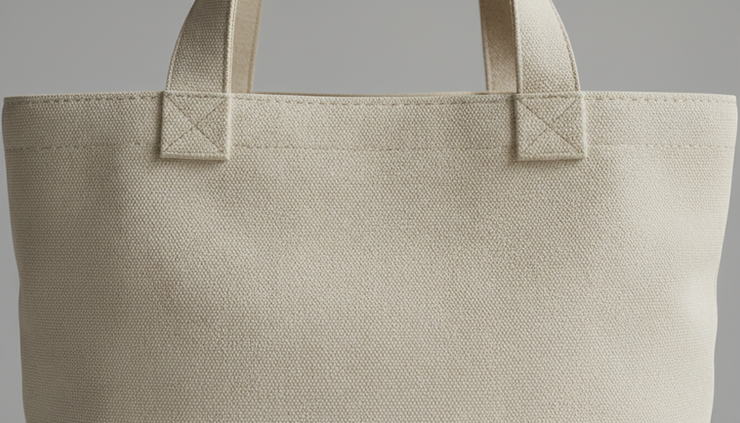
A cotton tote bag often fails at the seams or handles before the fabric wears out. Ask for close-up sample photos and physical pre-production samples.
Key quality checks include:
Reinforced cross-stitching at handle joints
Straight seams and even stitch count
Clean inside finishing
No loose threads
Accurate bag dimensions after washing or pressing
Consistent handle length
Print placement within agreed tolerance
For retail and premium orders, request AQL inspection criteria before production. This helps avoid disputes after goods are packed.
Printing and branding options
The most common print methods are screen printing and digital printing. Screen printing usually suits bulk orders with solid colours. Digital printing works better for detailed artwork, gradients, or small runs.
For export orders, confirm:
Artwork file format
Pantone or colour reference
Print size and placement
Ink type
Wash resistance
Print curing process
Approval sample before mass production
If the bags are for supermarkets, boutiques, universities, events, or corporate gifting, keep the artwork simple enough to print cleanly on woven cotton texture.
Pricing cotton tote bags from India
Wholesale prices vary by specification. A plain lightweight cotton bag will not price like a heavy canvas bag with gusset, zipper, inner pocket, and multi-colour printing.
The biggest cost drivers are:
Fabric weight and cotton type
Bag size and gusset depth
Handle length and reinforcement
Printing method and number of colours
Dyeing or washing process
Labels, tags, barcodes, and individual packing
Order quantity
Inspection and testing needs
Freight mode and destination
Most suppliers quote under Incoterms such as FOB, CIF, or DDP. Buyers should understand what each quote includes. For general rules, refer to the Incoterms guidance from the International Chamber of Commerce.
A practical quote request should include:
Detail | Example to provide |
Bag size | 38 cm x 42 cm |
Fabric | 10 oz cotton canvas |
Handle | 65 cm long shoulder handle |
Printing | One-side screen print, two colours |
Quantity | 5,000 pieces |
Packing | 100 pieces per carton, no individual polybag |
Destination | Port, airport, or full delivery address |
Certification | Organic, recycled, or social compliance if needed |
Ask suppliers to split product cost, inland transport, export packing, documentation, and freight where possible. This gives better visibility when comparing manufacturers.
Shipping logistics and documentation
India exports cotton tote bags by sea and air. Sea freight usually suits larger orders and repeat stock programmes. Air freight works for urgent campaigns, product launches, or event deadlines, but it raises landed cost.
Common export documents include:
Commercial invoice
Packing list
Shipping bill
Bill of lading or airway bill
Certificate of origin, if required
Inspection certificate, if arranged
Fumigation or packaging declaration, where applicable
Material or compliance certificates, if requested
Exporters in India may also refer to compliance information from the Directorate General of Foreign Trade. Importers should check destination rules with their own customs broker before shipment.
Plan shipping around these questions:
Will cartons be shipped loose or palletised?
Are cartons strong enough for long transit?
Is the destination warehouse asking for barcode or carton labels?
Are there restrictions on wooden pallets?
Is the shipment time-sensitive?
Who handles import duty, customs clearance, and local delivery?
A small trial shipment helps test quality and logistics before committing to a large order.

Market-by-market sourcing guidance
Each destination market has different buyer expectations. The bag may be the same, but compliance, labelling, packaging, and delivery planning can vary.
United Kingdom
The UK market has strong demand for eco-friendly tote bags, promotional bags, retail shopping bags, bookshop bags, museum merchandise, and event merchandise.
UK buyers usually value:
Clean stitching and neat finishing
Natural cotton and recycled cotton options
Low-plastic or plastic-free packing
Clear country-of-origin and fibre labelling where needed
Reliable delivery timelines for seasonal retail and events
Sea freight into the UK works well for planned wholesale orders. Air freight should be reserved for urgent replenishment because unit economics can change quickly. Importers can check current guidance through GOV.UK import information.
United States
The USA is one of the largest markets for promotional cotton bags, private label retail totes, conference bags, grocery totes, and college merchandise.
US buyers often request:
Large order capacity
Consistent repeat production
Strong screen printing
UPC or carton labelling
Compliance documents for retail channels
Clear freight planning for East Coast or West Coast routing
For USA imports, customs classification and duty review should be handled with a broker. The U.S. Customs and Border Protection website is a useful official starting point.
Suppliers exporting to the USA should pack cartons for longer inland movement, especially when goods move from port to distribution centres.
Canada
Canada has steady demand for retail totes, farmers’ market bags, natural grocery bags, tourism merchandise, and corporate gifting.
Buyers sourcing cotton tote bags from India for Canada should pay close attention to:
Bilingual packaging needs when products go into retail channels
Carton strength for long-distance domestic transport
Winter season delivery buffers
Labelling and importer details
Duties, taxes, and customs clearance through a Canadian broker
For official import guidance, refer to the Canada Border Services Agency.
Sea freight works well for planned programmes, while air freight can support urgent campaigns in Toronto, Vancouver, Montréal, Calgary, and other major markets.
United Arab Emirates
The UAE market is strong for retail packaging, event bags, hotel merchandise, exhibitions, gifting, and premium shopping bags. Dubai often acts as both an end market and a re-export hub.
UAE buyers commonly prefer:
Premium finishing
Fast sampling
Flexible customisation
Strong packaging for re-distribution
Clear carton marking
Options in natural, black, dyed, and heavy canvas
Because exhibition and event timelines can be fixed, production calendars must be realistic. Air freight may be practical for smaller urgent orders. Larger retail or hospitality orders usually move by sea.
External guidance can be checked through UAE customs and port authority resources relevant to the import location.
Germany
Germany is a quality-sensitive market with strong demand for reusable, natural, certified, and durable bags. Buyers often ask more detailed questions about materials, certification, and social compliance.
For Germany, focus on:
Organic cotton or recycled cotton validation
Strong stitching and long product life
Minimal packaging waste
Accurate labelling
REACH-related chemical safety awareness
Reliable technical documentation
Importers can review EU-level chemical rules through the European Chemicals Agency. For German retail buyers, vague sustainability claims can damage trust. Use claims only when documents support them.
Sea freight is common for planned wholesale orders. Build extra time for document review, testing, and buyer approval.
Japan
Japan expects consistency, clean finishing, accurate sizing, and careful packing. Even a simple tote bag should feel precise.
Japanese buyers often focus on:
Fine stitching and low defect rates
Neat folding and packing
Compact cartons
Subtle colours and high-quality natural finishes
Accurate samples that match production
Clear communication on tolerances
For customs information, importers can refer to Japan Customs.
For Japan, pre-production samples matter. A supplier should not treat sample approval as a formality. The final shipment should match the approved sample closely in fabric feel, shade, print position, and finishing.
Australia
Australia has demand for reusable shopping bags, event totes, beach and lifestyle bags, school bags, and eco retail packaging. Cotton totes fit well in retail, tourism, wellness, grocery, and outdoor categories.
Australian sourcing plans should include:
Strong cartons for long sea transit
Awareness of biosecurity and packaging rules
Clear importer and product information
Delivery buffers for port clearance and inland transport
Durable fabric for daily use
For official guidance, refer to the Australian Border Force and relevant biosecurity information from the Department of Agriculture, Fisheries and Forestry.
Sea freight is usually the right option for bulk orders. Air freight works for urgent retail launches but should be costed carefully.
How to choose the right Indian cotton tote bag supplier
A supplier’s website or catalogue is only the starting point. The buying process should test both product quality and export reliability.
Use this checklist before confirming a bulk order.
Ask for factory or production unit details
Review recent export experience for your market
Request fabric swatches and printed samples
Confirm GSM, size, tolerance, and shrinkage expectations
Check stitching quality on samples
Ask for certification documents if sustainability claims are made
Confirm production lead time in writing
Agree on inspection process before packing
Review export carton size, weight, and marking
Compare landed cost, not only unit price
For private label programmes, add specifications for woven labels, care labels, hang tags, barcode stickers, and retail packing. For promotional orders, lock artwork and delivery dates early.
A strong supplier will ask detailed questions before quoting. That is a good sign. It means the factory is pricing the real product, not a vague version of it.
Common mistakes to avoid
Many sourcing issues begin before production starts. The quote is too vague, the sample is not approved properly, or the shipping plan is left until the order is ready.
Avoid these common mistakes:
Choosing only the lowest quote
Not confirming fabric GSM
Ignoring handle strength
Approving artwork without a print sample
Making unsupported organic or recycled claims
Forgetting destination labelling rules
Not checking carton weight and dimensions
Leaving customs classification to the last minute
Assuming air freight will be affordable
Skipping inspection for large orders
For SEO and buying clarity, product pages should use specific terms such as custom cotton tote bags, canvas tote bags wholesale, organic cotton tote bags, and private label tote bags only when the specification truly matches the product.
Final takeaway for global buyers
India offers a strong mix of textile skill, cotton availability, customisation options, and export experience. That makes it a practical sourcing base for buyers in the UK, USA, Canada, UAE, Germany, Japan, and Australia.
The best results come from precise specifications, approved samples, clear documentation, realistic lead times, and market-specific compliance checks. Treat the tote bag as an engineered textile product, not a generic giveaway item. That approach protects quality, landed cost, and customer trust.
Comments