Step by Step OEM Guide to Private Label Incense Sticks for USA and Canada

Incense is a small product with a large branding opportunity. A single box can carry a mood, a ritual, a fragrance story, and a repeat purchase habit. That is why private label incense sticks are attractive for wellness brands, gift retailers, home fragrance companies, yoga studios, spiritual stores, and online sellers entering the USA and Canada.
Private labelling lets a brand sell incense under its own name while an OEM manufacturer handles production. Instead of building a factory, sourcing raw bamboo sticks, blending aromatic compounds, and managing drying rooms, the brand focuses on positioning, packaging, compliance, and sales.
This guide explains the process from concept to launch, with practical steps for supplier selection, packaging, regulations, quality checks, and marketing.
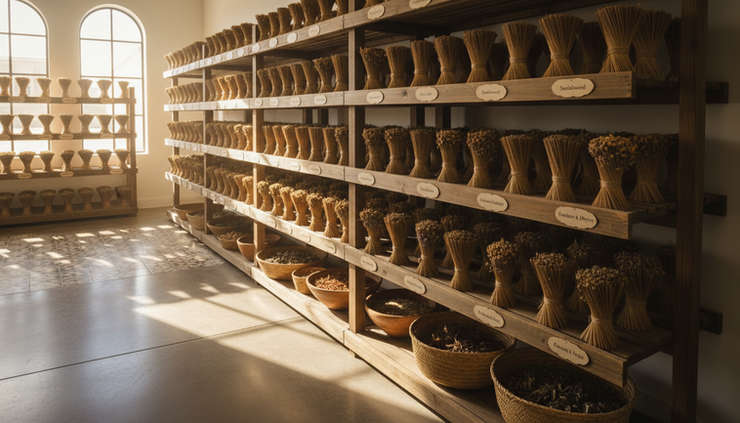
Private labelling incense gives brands a faster route to market
Private labelling means selling a product made by another manufacturer under your own brand name. OEM, or original equipment manufacturing, goes a step further. It can include custom fragrance development, stick length, burn time, raw material choices, packaging, and batch specifications.
For incense sticks, OEM private labelling can support many product types:
Masala incense sticks
Charcoal incense sticks
Bamboo core incense
Dhoop sticks or cones
Backflow cones
Low-smoke incense
Natural resin or herb-based blends
Gift sets and sampler packs
The appeal is clear for USA and Canada brands. The home fragrance, wellness, meditation, décor, and gifting categories all leave room for niche positioning. A brand can build around themes such as calm evenings, seasonal rituals, temple-inspired blends, minimalist home fragrance, or premium handmade incense.
The main benefits include:
Lower setup cost
A brand does not need to invest in machinery, fragrance rooms, curing space, or labour training.
Quicker product testing
Small batches help test fragrances before committing to larger purchase orders.
Custom brand control
Packaging, names, scent families, and product stories can be shaped to match the target market.
Scalable supply
A capable manufacturer can increase production when repeat orders begin.
Access to manufacturing skill
Good incense production needs experience. Raw powder ratios, fragrance absorption, drying time, humidity control, and stick straightness all affect the final product.
Private label OEM incense stick manufacture works best when the brand treats the manufacturer as a production partner, not just a low-cost supplier. The more precise the brief, the better the result.
Choose suppliers and manufacturers with a structured process
Supplier selection is the most important decision in the project. A beautiful label cannot fix poor burn quality, weak fragrance, broken sticks, or late shipments.
Define the product before contacting factories
Start with a clear product brief. It does not need to be perfect, but it should answer basic questions.
Include:
Product type
Stick length
Approximate burn time
Fragrance direction
Target customer
Price positioning
Packaging format
Expected first order quantity
Sales channel
USA, Canada, or both markets
For example, a clear brief could say:
“A premium 9-inch masala incense stick range for meditation and home fragrance, packed in 20-stick recyclable paper boxes, with sandalwood, lavender, and frankincense-inspired scents for the USA and Canada.”
That level of detail helps suppliers respond with relevant options.
Build a shortlist of possible manufacturers
Look for manufacturers with incense experience, export knowledge, and private label capability. A general fragrance supplier may not understand incense combustion, drying, breakage, and ash behaviour.
Useful evaluation points include:
Evaluation area | What to check |
Product capability | Types of incense, fragrance options, customisation limits |
Export experience | Familiarity with USA and Canada documentation |
Minimum order quantity | Flexibility for trial orders and scaling |
Quality control | Batch testing, inspection process, retained samples |
Packaging support | Box printing, barcodes, inserts, outer cartons |
Communication | Response speed, clarity, willingness to document details |
Compliance support | Ingredient disclosures, SDS, IFRA-related documents where relevant |
Ask for photos of production areas, sample packaging, and previous export formats. Do not ask for another brand’s confidential files, but a reliable supplier should be able to show general capability.
Request samples and test them properly
Never approve incense from a description alone. Order samples of existing scents and, if possible, custom versions based on the brief.
Test samples for:
Cold fragrance before burning
Fragrance while burning
Smoke level
Burn time consistency
Ash stability
Stick straightness
Breakage during handling
Residue on packaging
Scent strength after a few weeks
User experience in a normal room
Use a simple scoring sheet. Test more than one stick from each batch. Incense can vary if drying and dipping are not well controlled.
Ask the right supplier questions
Good supplier questions reduce risk early.
Ask:
What raw materials are used in the base?
Are fragrances synthetic, natural, or blended?
Can allergens or restricted substances be documented?
Can the supplier provide a Safety Data Sheet where applicable?
What quality checks are done before packing?
What is the normal production lead time?
How are sticks packed to prevent moisture and breakage?
What are the payment terms?
What happens if a batch fails inspection?
Can the supplier support bilingual packaging for Canada?
Can barcodes, batch codes, and carton marks be added?
The answers should be specific. A vague “no problem” is not enough.
Confirm commercial terms before artwork begins
Before paying for final packaging design, confirm the commercial details in writing.
Include:
Product specification
Approved fragrance sample reference
Stick count per box
Net weight or quantity statement
Packaging material
Inner and master carton details
Minimum order quantity
Unit price
Tooling or printing charges
Lead time
Inspection terms
Shipping terms
Payment schedule
Defect policy
This protects both sides. It also gives the packaging designer accurate information.

Design packaging and branding that earns attention
Incense packaging has two jobs. It must protect a fragile scented product, and it must make the customer understand the fragrance quickly.
For USA and Canada markets, shoppers often compare incense by scent, mood, ingredient style, origin story, and design. Packaging must make those choices easy.
Build a clear scent architecture
A strong incense line usually needs a simple structure. Avoid launching too many unrelated fragrances at once.
Common scent families include:
Woods such as sandalwood, cedar, agarwood-inspired accords
Florals such as rose, jasmine, lavender
Resins such as frankincense, myrrh, copal-inspired blends
Herbs such as sage, tulsi, rosemary
Warm blends with spice, amber, vanilla, or patchouli
Fresh blends with citrus, tea, or green notes
Name each fragrance in a way that is easy to remember. A poetic name can work, but the customer should still know what it smells like. “Temple Sandalwood” is clearer than “Golden Silence” on its own.
Choose packaging that suits the sales channel
Retail shelves, online marketplaces, subscription boxes, and boutique stores have different needs.
For physical retail, packaging should:
Show the scent name clearly
Stand upright or stack neatly
Resist crushing during handling
Include barcode and required information
Look consistent across the range
For e-commerce, packaging should:
Survive shipping
Prevent fragrance transfer
Photograph well
Fit mailer boxes efficiently
Reduce breakage and returns
Popular packaging formats include paperboard boxes, kraft sleeves, rigid gift boxes, tubes, and inner poly or glassine-style wrapping. If using plastic, consider customer expectations around sustainability. Many incense buyers prefer natural-looking and recyclable materials, but the pack still needs to preserve scent.
Use design to build trust
Good incense packaging does not need to be loud. It needs to feel intentional.
Focus on:
Readable hierarchy
The brand name, scent name, stick count, and product type should be easy to find.
Consistent colour system
Use colours to separate scents, but keep the overall range cohesive.
Tactile materials
Textured paper, matte finishes, or simple embossing can create a premium feel.
Practical information
Include burn instructions, storage guidance, safety warnings, country of origin, and quantity details.
Cultural care
If using spiritual, traditional, or regional references, handle them with respect. Avoid sacred symbols as decoration unless the brand has a legitimate reason and context.
Packaging should look good, but it must also meet labelling rules. Design and compliance need to work together from the start.
Understand regulations and quality standards before launch
Regulatory compliance for incense is not a place for guesswork. Rules can change, and requirements may vary by product composition, claims, province, state, and sales channel. This section is informational only. Brands should consult qualified regulatory, legal, or customs professionals before importing or selling.
USA considerations
In the USA, incense packaging often needs to consider general consumer product and labelling expectations.
Key areas include:
Product identity
Net quantity or count
Name and place of business of manufacturer, packer, or distributor
Country of origin for imported goods
Safety warnings for burning products
Barcode requirements for retail channels
Claims made on packaging or listings
The Federal Trade Commission has rules linked to fair packaging and labelling for many consumer commodities. The Consumer Product Safety Commission may become relevant for product safety concerns, especially where flammability, household hazards, or unsafe use are involved.
California Proposition 65 may also matter if products expose consumers in California to listed chemicals above safe harbour levels. Incense combustion can create smoke, so brands selling into California should take Prop 65 review seriously.
Avoid unapproved health claims. Do not claim that incense cures anxiety, treats disease, purifies lungs, or provides medical benefits. Words such as “calming” or “relaxing” may still need careful review depending on the full marketing context.
Canada considerations
Canada has its own packaging and product safety expectations. Incense sold in Canada may need to consider:
Consumer Packaging and Labelling Act requirements
Bilingual English and French labelling
Net quantity declarations
Dealer identity
Country of origin where applicable
Canada Consumer Product Safety Act obligations
Hazard communication where relevant
Provincial language rules, especially for Quebec
For Canada, bilingual packaging should not be added at the last minute. English and French copy affects layout, type size, warning labels, and box panels.
Quality standards to set with the manufacturer
Even when a product is legally compliant, it still needs to perform well. Quality standards should be part of the purchase agreement.
Set standards for:
Stick length tolerance
Stick count per pack
Fragrance consistency
Burn time range
Moisture level
Breakage limit
Ash behaviour
Smoke level based on product type
Packaging sealing
Batch coding
Carton strength
Shelf-life expectations
Ask the supplier to keep reference samples from every approved batch. Brands should also keep their own retained samples. If a customer complaint appears later, retained samples help compare the shipped product with the approved standard.

Plan the launch before the stock arrives
The question of how to start private label incense brand in USA often gets framed as a sourcing problem. Sourcing matters, but launch planning matters just as much. Inventory that arrives without clear positioning, photography, and channel strategy can sit unsold.
Define a narrow first customer
A focused incense brand is easier to market than a general one.
Possible positioning routes include:
Meditation and yoga rituals
Premium home fragrance
Spiritual and metaphysical retail
Eco-conscious gifting
Minimalist daily incense
Seasonal fragrance collections
Cultural or heritage-inspired incense, handled with care
The first product range should speak to one main use case. A brand can expand later once repeat buyers show what works.
Prepare product content for each channel
Every sales channel needs its own content structure.
For e-commerce listings, prepare:
Clear product title
Scent description
Stick count
Burn time range if verified
Safety instructions
Ingredients or material style where appropriate
Country of origin
Lifestyle use suggestions
Storage instructions
High-quality product photos
For wholesale buyers, prepare:
Line sheet
Case pack details
Wholesale price
Suggested retail price
Minimum order
Tester or sample policy
Display options
Compliance and barcode information
For retail shelves, prepare:
Shelf-ready cartons if needed
Counter display options
Sample sticks or testers where allowed
Simple scent cards
Staff education notes
Use sampling to reduce buying hesitation
Incense is sensory. Customers want to smell it before committing. Sampling can increase trust, especially for a new brand.
Options include:
Mini discovery packs
Three-scent sampler boxes
Free sample with each order
Wholesale tester bundles
Seasonal trial sets
Gift-with-purchase sticks
Make sure samples are labelled with safety guidance. A loose unlabelled stick can create confusion and risk.
Build repeat purchase into the range
Incense is often a repeat-use product. Build the line with replenishment in mind.
Practical tactics include:
Keep core scents available year-round
Add limited seasonal scents carefully
Offer multi-packs for best sellers
Create subscription options if demand supports it
Use batch codes to track customer feedback by production run
Ask customers which scents they want next
Do not launch with too many SKUs. A tight range of three to six scents is easier to manage, photograph, stock, and promote.
Manage production, shipping, and post-launch feedback
Once samples, artwork, and terms are approved, the project moves into production. This stage needs discipline.
Before mass production begins, approve:
Final pre-production sample
Printed packaging proof
Barcode placement
Warning text
Carton marks
Master carton strength
Batch code format
Final inspection checklist
During production, request progress updates. For larger orders, use pre-shipment inspection. The inspection should check product count, packaging quality, scent match, breakage, carton condition, and labelling details.
Shipping incense also needs care. Fragranced goods can absorb moisture, lose scent, or transfer aroma if poorly packed. Ask how the supplier controls humidity, inner wrapping, and carton lining. Confirm whether any fragrance components trigger special transport documentation.
After launch, collect feedback in a structured way. Look beyond star ratings. Track comments about scent strength, smoke, broken sticks, packaging damage, burn consistency, and repeat purchase. Share useful feedback with the manufacturer before the next batch.
The best private label incense brands improve each production cycle. They do not treat the first shipment as the final version.

A practical path from concept to shelf
Private label incense can be a strong entry point into home fragrance, wellness, gifting, and ritual-based retail. The opportunity is real, but success comes from careful execution.
Start with a clear product brief. Choose an OEM partner with proven incense experience. Test samples with discipline. Design packaging that sells the scent while meeting USA and Canada requirements. Treat compliance, quality control, and shipping as core parts of the brand, not back-office details.
A strong incense line is built one batch at a time. When the fragrance, packaging, safety information, and customer promise all match, the product has a much better chance of earning repeat buyers.


Comments